
Don't trust the process
Why tying your effort to an outcome creates more anxiety than the setback itself and what to trust instead.
Snapshot
"Trust the process" assumes the process knows where it's going, which only holds true in genuinely predictable situations. Most of life isn't one of them. The more we anchor our effort to a specific outcome, the more every setback starts to feel personal, and our sense of worth starts to ride on something we were never fully in control of. There's a steadier place to stand than the process.
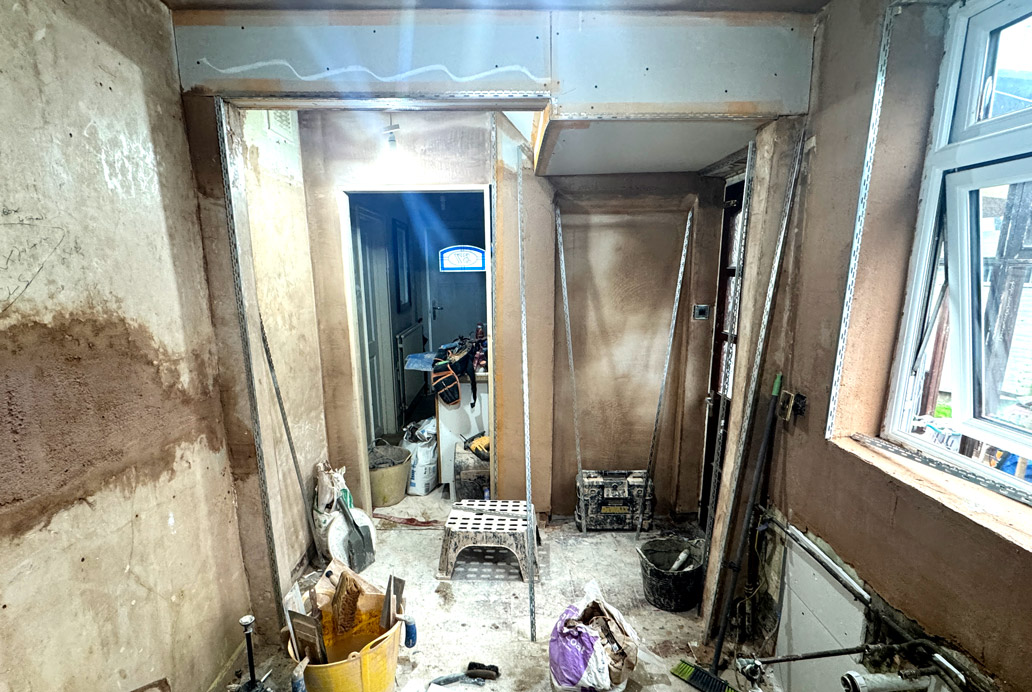
If you've ever fitted a kitchen, you'd know or can imagine the process it takes.
I was watching over my builder soldering the pipes for our kitchen, the first attempt, leaked. Second attempt, leaked. Third, leaked. On the fourth attempt, he reheated the joint again. There were no sounds of frustration, no sigh, no muttering, just quiet focus.
I curiously said, "I like how you don't get overly worked up because it hasn't worked." He replied by saying, "I don't see the reason why we should.
Unlike the plasterer who came before him, who had a lot to share with his co-workers about the work that wasn't being done on other projects, what one person had said or how stressful they were managing the business.
I couldn’t help thinking that if it were me, I might have become frustrated after the second leak. Not because it didn’t work. But when I’m doing something that isn’t natural to me, the effort feels heavier.
When the challenge comes from something I enjoy or care about, I lean in; I'm ready to tackle anything to get it done. Can you relate? Otherwise, when it doesn’t, every failed attempt feels like friction.
We see this often when people try to accomplish something they aren’t truly invested in. When the work itself doesn’t matter, the outcome becomes the only thing that does. The prize motivates us to keep pushing forward.
Keeping “the end in mind” isn’t a bad thing. But when our attachment to the outcome becomes too strong, it creates more inner conflict than we realise.
- The work becomes heavy
- Progress becomes emotional
- Every failed attempt starts to feel personal
My builder thrives on problem-solving, not on the outcome. When I ask him how he thinks the kitchen looks overall, he often gives a shallow "it's great, yeah".
It's process, not promise
Watching him work made me think of the phrase we often hear when progress is slow: "trust the process." And I wondered what it is about the process that makes it feel reassuring.
The language is comforting, but it's not the truth. When we say trust the process, we assume the process knows where it's going. And sometimes that assumption holds: for example, if you spend two years in the gym, your health will likely improve. Eat poorly for a year, and your body will probably reflect it. We know this.
The problem with the assumption is that we apply the same predictable logic to unpredictable situations. Would you be ok with 'trust the process' in truly unpredictable outcomes? Have you ever heard of someone say 'trust the process' when:
- The debt collector knocks on the door?
- or, you've just lost a 15-year career you worked so hard for?
- or, your decision cost the company a lot of money?
- or, when you find yourself caught in a war zone?
- or, when an immediate family member passes?
My guess is, you haven't. It's not a 'fitting' place to say, right?
There is a silent implication; by saying "trust the process, it makes you believe there is an outcome awaiting you. How exactly can such an implication be made? This is another case of false certainty. A short-term reassurance, this time for outcomes that feel out of reach. It's better to hear than not know what's going to happen.
I often remind myself to adopt what is universally applicable, not just when we feel like we need it. If something doesn't work contextually, in all scenarios, it's short-lived.
The process is not a promise; dismantle that assumption. Here is what it is: the process is a period to take biased action. Action that matters, action that feels like the prize itself.
She handed it over
I learnt this lesson long before I ever heard the phrase trust the process. Because when life experiences become uncertain, those phrases don't hold. And many times, nobody is around to share the burden with. One particular experience stays with me.
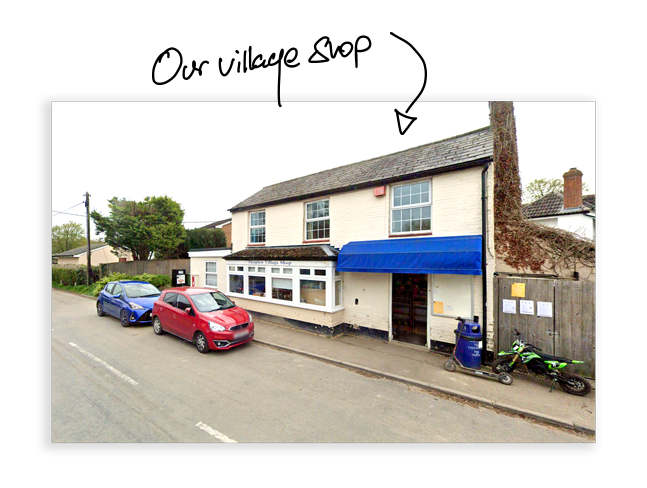
Two men dressed in black coats walked into our convenience store in Cambridge. This shop was once my mum's dream; eventually, they worked to make it real. As much as the shelves were half empty and debts were high, she ran the shop with pride.
One day, those men walked in to collect a debt my parents couldn't afford. Here in the UK, we call them Bailiffs. As they cleared the stock, I stood near the back of the store, intently listening. We owed £800, and we could only cover half of it.
My mum froze. My dad stood silent. Nothing could be done; we didn't have the money. The shop was struggling to yield. The silence in the store was the sound of everything they had built leaving.
Five minutes in, the majority of the stock had been removed. A village lady, a regular visitor, walked into the store. She walks over to my mum and says, "I don’t know why, but I feel God is telling me to give you £500." She handed it over, settled the debt, and the half-empty shop filled back up with hope. Friend, true story!
Who could've predicted that outcome? What predictable result can match this scenario?
No process could have accounted for it. No step-by-step formula could have led us there. Life unfolds through people, circumstance, timing, action, and moments that no system can anticipate.
Trusting the process quietly collapses in situations like this. The phrase is built on a cause-and-effect relationship. That doing something produces something. That's not wrong, but anchoring on what is produced takes us away from the work itself. It becomes transactional, effort for outcome, and when the outcome is nonexistent or delayed, scramble to find anything to calm the nerves.
Perhaps the real orientation isn't trusting a process at all, but learning to respond to the results that emerge from our effort, meeting reality and moving with it.
The pursuit itself
I asked my mum if she'd ever want to own a similar business again, and I could see the spark in her face.
For her, the shop was the vehicle that allowed her to orient herself. It allowed her to express how she showed up, the pride she took in her work, and how she often over-delivers for others. Daily moments of meeting people, serving them, stocking products, and driving to bigger trade stores to buy more stock.
And when I think about it, these moments are happening all around us.
A parent helping a child with homework after a long day.
A nurse finishing a night shift, knowing tomorrow will bring the same demands again.
A founder is making another difficult decision with incomplete information.
A builder is reheating a pipe joint for the fourth time without frustration.
A leader finds team dynamics challenging.
None of these moments comes with applause, nor do they guarantee an outcome. When we recognise that, something shifts. The work stops feeling like a bridge to the prize because the prize was always the pursuit itself.
The fact that they can pursue it, people get to do what they love and enjoy. Take that away from them, and I know for me, I'd lose not only interest but who I am at my core.
The problem with giving the outcome all the power and making the result our destination is that we begin to associate the result with our worth. When the outcome is as expected, we feel validated. When it isn’t, we question ourselves. The work stops being an expression and becomes an evaluation.
I'm sure I'm not the only one here who has overly criticised myself for something not working, and on the odd occasion when it did, the feeling of contentment turned to arrogance.
Could the result simply be an output? Does it need to be anything more? Like a science experiment. Stand back, observe, record and adjust. The real joy was never waiting for the end to come; it is to remain in the moment of it, as long as possible. How long would you spend doing the thing that brings you the most joy? My hunch is as long as possible.
I no longer entertain 'trust the process', instead I'd encourage you to trust the pursuit.
The pursuit knows what the road ahead will demand of you. If you pursue entrepreneurship, you accept iteration. Failed attempts. Moments of progress. Rejections. Difficult decisions. Financial pressure. Uncertainty.
A creative knows the pursuit contains doubt. Revision. Criticism. Periods where nothing seems to work. The love for craft and the freedom to be creative.
A leader knows the pursuit contains responsibility. Incomplete information. Hard conversations. Decisions that affect other people. Mistakes with costly effects.
No pursuit guarantees outcomes, only effort, because that is the nature of the work: the space for expression, the challenges for growth, the feedback that shapes our next move, the pressure that tests our resolve, and the satisfaction of showing up again and again.
All said and done
Most experiences are unpredictable, so stop applying predictable logic to them. Results will come and go, some expected and others impossible to anticipate.
What hold true is the effort that is required. Instead of anchoring to promises, recognise the inherient rewards available: Effort. Engagement. Opportunity.
The more we practise the art of showing up, the more confident we become at meeting reality and no longer linger on anything more.
Trust in the pursuit.
FAQ
Why doesn't "trust the process" actually work?
It assumes the process knows where it's going or dangerously, it signals a guarantee, which only holds in genuinely predictable situations. In any uncertain situation, the phrase offers false reassurance rather than an honest answer. Overly assocating to this false certainty create dissonace.
What does it mean to be "attached to an outcome"?
It's when your effort only feels worthwhile if it produces the specific result you wanted. The work stops being an expression and becomes an evaluation, so any outcome other than the one you expected starts to feel like a personal failure.
Why does focusing on the outcome create more anxiety than motivation?
Because it makes worth conditional on something you don't fully control. Effort you can direct; outcomes you can only meet. The more weight you put on the result, the heavier every attempt feels before you even know how it turns out.
How do I stop tying my self-worth to results?
By treating the result as an output to observe and adjust from, not a verdict on you. The reward worth trusting is the effort, engagement, and opportunity the work itself gave you, whatever it produced. You are operating from whole already, there is nothing to fill within.
If not the process, what should I trust instead?
The pursuit. A process implies a guaranteed destination; a pursuit only guarantees the effort, doubt, setbacks, and growth that come with doing something that matters to you, regardless of where it ends up.